Staying hydrated is one of the simplest ways to support your overall well-being, yet it is easy to forget to drink enough water when life gets busy. Whether you are working at your desk, running errands, exercising, or managing a busy household, learning how to stay hydrated throughout the day can help you build a healthier daily routine.
Water plays an important role in regulating body temperature, transporting nutrients, supporting digestion, and helping your body function properly. However, hydration does not have to mean carrying a huge water bottle everywhere or forcing yourself to drink water constantly.
The key is to develop small, consistent habits that fit naturally into your lifestyle. In this guide, you will discover practical hydration tips, water-rich foods, common mistakes to avoid, and simple ways to recognize when your body needs more fluids.
Table of Contents
Why Is Staying Hydrated Important?
Water makes up a substantial portion of the human body and supports many essential processes. Getting enough fluids throughout the day helps your body maintain its normal functions.
Here are some important benefits of proper hydration:
- Regulates body temperature: Sweating helps your body cool down, especially during exercise or hot weather.
- Supports digestion: Water helps move food through your digestive system and supports normal bowel function.
- Transports nutrients: Fluids help carry nutrients throughout the body.
- Supports physical performance: Dehydration can contribute to fatigue and reduced exercise performance.
- Helps maintain concentration: Even mild dehydration may affect mood, attention, and mental performance in some people.
- Supports kidney function: Your kidneys use water to remove waste through urine.
Hydration also matters for everyday comfort. Developing a consistent water-drinking routine can help you respond to thirst before you become significantly dehydrated.
How Much Water Should You Drink Daily?
There is no single amount of water that works for everyone. Your hydration needs depend on factors such as age, activity level, climate, pregnancy, breastfeeding, and overall health.
The U.S. National Academies provides general daily adequate intake estimates of approximately 11.5 cups of total water for women and 15.5 cups for men For more information, read the CDC’s guide to water and healthier drinks.. These estimates include water from both beverages and food, not just plain drinking water.
Individual needs can vary considerably. Someone exercising outdoors in hot weather may need more fluids than someone spending the day in a cool office.
Does All Water Have to Come From a Glass?
No. Plain water is an excellent choice, but other beverages and moisture-rich foods also contribute to your daily fluid intake.
Milk, unsweetened tea, soups, fruits, and vegetables can all help supply water. You do not need to rely exclusively on plain water to stay hydrated.
Instead of treating a particular number as a strict target, pay attention to your thirst, daily activities, and other signs of hydration. If a healthcare professional has recommended a fluid limit because of a medical condition, follow that advice.
10 Easy Ways to Stay Hydrated Throughout the Day
The easiest way to improve your hydration habits is to connect drinking fluids with activities you already do. These ten strategies can help you create a routine that feels manageable.
1. Start Your Morning With Water
After waking up, drink a glass of water as part of your morning routine. Keep a clean glass or reusable bottle near your usual breakfast spot to make the habit easier.
You do not need to drink a large amount immediately after waking. A comfortable glass is a simple starting point.
Pair this habit with another morning activity, such as brushing your teeth or preparing breakfast. Repeating the same action daily can help make drinking water automatic.
2. Carry a Reusable Water Bottle
Keeping water nearby makes it easier to drink regularly throughout the day. A reusable bottle can be especially helpful at work, school, while traveling, or when running errands.
Choose a bottle that is comfortable to carry and easy to clean. If you prefer cold water, consider an insulated bottle.
You can also use a bottle with measurement markings to understand approximately how much you drink without constantly counting individual glasses.
3. Set Gentle Hydration Reminders
If you frequently forget to drink water, use your phone, smartwatch, or computer to create occasional reminders.
For example, you might drink water:
- After finishing your morning routine.
- When you begin work or study.
- Around lunchtime.
- Before or after a walk.
- When you return home.
These reminders should support your natural thirst rather than force you to drink on a rigid schedule. Adjust them to suit your needs and avoid drinking excessive amounts in a short period.
4. Drink Water With Your Meals
One easy way to improve your hydration routine is to serve water with breakfast, lunch, and dinner.
Keeping a glass on the table makes water readily available, while drinking with meals helps you build a consistent habit.
You can also drink water when having a snack, particularly if you tend to forget about fluids between meals.
Remember that you do not need to avoid all other beverages. Simply making water a regular part of your meals can be a useful change.
5. Eat More Water-Rich Foods
Drinking water is important, but food can contribute to your daily hydration too.
Try including these water-rich foods in your meals and snacks:
- Cucumber: Refreshing in salads or sliced as a snack.
- Watermelon: A juicy option for warm days.
- Strawberries: Easy to add to breakfast or yogurt.
- Oranges: Provide fluid along with vitamin C.
- Lettuce: Works well in salads and sandwiches.
- Tomatoes: Useful in salads, wraps, and cooked dishes.
- Cantaloupe: A refreshing addition to breakfast or snacks.
Eating a variety of fruits and vegetables can make your diet more enjoyable while helping you obtain water and other essential nutrients.
6. Make Plain Water More Enjoyable
If you find plain water boring, experiment with natural flavor combinations.
Try adding a few slices of lemon, lime, cucumber, or fresh strawberries. Mint leaves can also provide a refreshing taste.
Another option is to keep a pitcher of infused water in the refrigerator so it is ready when you want a drink.
You do not need to add sugar or flavored syrups to make water more appealing. Simple ingredients can provide variety without turning your drink into a sugary beverage.
7. Drink More During Exercise
Physical activity increases fluid needs because your body loses water through sweat. The amount you need depends on how long and intensely you exercise, the temperature, and your individual sweat rate.
For a practical approach:
- Begin exercise normally hydrated.
- Keep water accessible during your workout.
- Drink according to thirst and the conditions.
- Replace fluids after exercise, especially if you have sweated heavily.
For prolonged, intense exercise or activity in hot weather, an electrolyte-containing drink may be useful. For many ordinary workouts, water is sufficient.
Avoid forcing yourself to drink beyond your needs, as excessive fluid intake during exercise can also be dangerous.
8. Pay Attention to Hot Weather
Hot weather can increase fluid losses through sweating. This is especially important during summer, outdoor activities, travel, or work in warm environments.
To support hydration in hot conditions:
- Carry water when leaving home.
- Take breaks in cool or shaded places.
- Wear lightweight clothing when appropriate.
- Reduce strenuous activity during the hottest part of the day.
- Drink regularly and respond to thirst.
Do not rely on thirst alone during demanding heat exposure, as it may not always keep up with fluid losses. Follow workplace, sports, or medical guidance when conditions are particularly hot.
9. Keep Water Within Reach at Work
Long workdays can make it surprisingly easy to forget about drinking. If you spend hours at a desk, place your bottle somewhere visible rather than keeping it in a bag or drawer.
You can also connect drinking water with natural breaks, such as standing up, stretching, or finishing a task.
For people working away from a desk, carrying a bottle in a bag or keeping water at an accessible break area can make the habit more convenient.
Small environmental changes often work better than relying on memory alone.
10. Build a Consistent Evening Routine
Hydration should continue throughout the day, but there is no need to drink large quantities right before bed.
Have water with dinner and drink if you feel thirsty in the evening. If drinking late at night regularly interrupts your sleep, try distributing your fluid intake more evenly earlier in the day.
Keep water beside your bed if you find it useful, but avoid forcing yourself to finish a bottle before sleeping.
A balanced routine is more helpful than trying to make up for an entire day of low fluid intake at once.
Foods That Help Keep You Hydrated
Hydrating foods are a simple way to add variety to your diet while contributing to your overall fluid intake.
Here is a quick guide to foods you can incorporate into everyday meals.
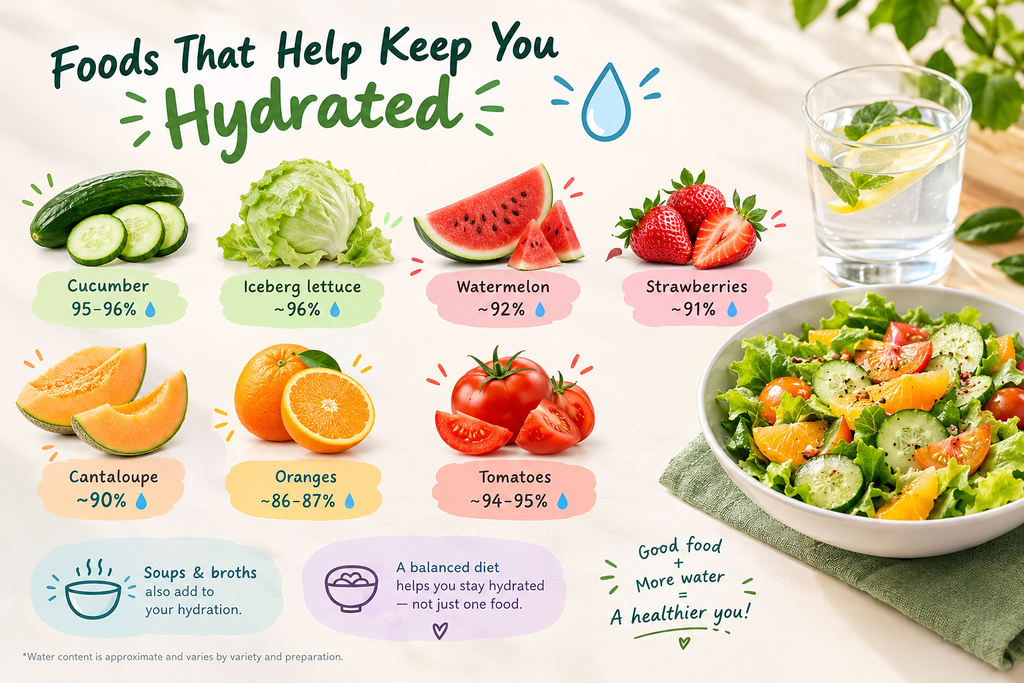
| Food | Approximate water content | Easy way to enjoy it |
|---|---|---|
| Cucumber | 95–96% | Add to salads or sandwiches |
| Iceberg lettuce | About 96% | Use in salads and wraps |
| Watermelon | About 92% | Enjoy chilled as a snack |
| Strawberries | About 91% | Add to oatmeal or yogurt |
| Cantaloupe | About 90% | Serve with breakfast |
| Oranges | About 86–87% | Eat whole or add to fruit bowls |
| Tomatoes | About 94–95% | Add to salads or sandwiches |
Water content is approximate and varies by variety and preparation.
You can combine several of these foods in a simple lunch, such as a salad with lettuce, cucumber, tomatoes, and orange slices on the side.
Soups, broths, and other water-containing foods also contribute to hydration. Eating a balanced diet is more useful than depending on a single food to meet your fluid needs.
Signs You May Need More Fluids
Recognizing possible signs of dehydration can help you respond before fluid loss becomes more serious.
Common signs include:
- Feeling thirsty.
- Having a dry mouth.
- Passing urine less frequently than usual.
- Noticing darker-than-usual urine.
- Feeling tired or lightheaded.
- Experiencing a headache.
Pale yellow urine often indicates adequate hydration for many healthy adults, but urine color is not a perfect measure. Vitamins, foods, medicines, and medical conditions can change its appearance.
When Should You Seek Medical Help?
Severe dehydration can be dangerous. Seek urgent medical attention for concerning symptoms such as confusion, fainting, very little or no urine, or significant difficulty staying awake.
Vomiting, diarrhea, fever, and heavy sweating can increase fluid losses. Infants, older adults, and people with certain medical conditions may be at greater risk of dehydration.
If you have ongoing symptoms or are unsure how much fluid you should drink, contact a healthcare professional for personalized advice.
Common Hydration Mistakes to Avoid
Even when you are trying to drink enough water, a few habits can make hydration more difficult.
Waiting Until You Feel Extremely Thirsty
Thirst is a useful signal, but you may fall behind on fluid replacement during intense exercise or hot weather. Keep water accessible and develop regular drinking habits.
Drinking Too Much Water Too Quickly
More water is not always better. Drinking excessive amounts in a short period can dangerously lower the sodium concentration in your blood, a condition called hyponatremia.
Drink gradually according to your needs rather than forcing yourself to consume large quantities at once.
Relying Only on Coffee or Energy Drinks
Coffee and tea contribute to fluid intake, and moderate caffeine consumption does not automatically cause dehydration in most healthy adults. However, relying heavily on highly caffeinated or sugary drinks is not an ideal hydration strategy.
Choose water regularly and be mindful of your overall caffeine and added-sugar intake.
Ignoring Your Activity Level
Your fluid needs may change when you exercise, spend time outdoors, travel, or experience hot weather. A routine that works on a quiet day may not be enough during a strenuous one.
Adjust your intake to your circumstances instead of following the same rigid target every day.
Following a One-Size-Fits-All Water Rule
Advice such as drinking exactly eight glasses daily can be a convenient reminder, but it does not account for every person’s needs.
Consider your food, beverages, activity level, climate, and health. People with kidney, heart, or other conditions that affect fluid balance may need individualized recommendations.
Frequently Asked Questions
Keep a reusable water bottle nearby, drink water with meals, eat fruits and vegetables with high water content, and increase fluid intake when exercise or heat raises your needs. Build habits around activities you already do so hydration becomes part of your routine.
Fluid needs vary by age, activity level, climate, and health. General U.S. guidance estimates total daily water intake at approximately 11.5 cups for women and 15.5 cups for men, including food and all beverages. These figures are general reference points rather than strict requirements for everyone.
Cucumber, watermelon, strawberries, oranges, cantaloupe, lettuce, and tomatoes are good choices because they contain substantial amounts of water. Soups and broths can also contribute to daily fluid intake.
Yes. Coffee contributes to fluid intake, and moderate coffee consumption generally does not cause dehydration in healthy adults. However, water is an excellent everyday choice, and it is sensible to limit excessive caffeine and sugary additions.
Thirst, urine frequency, urine color, activity level, and the weather can provide useful clues. Pale yellow urine is often a reasonable sign of hydration for healthy adults, but no single indicator is perfect. Seek medical advice if you experience persistent symptoms or have a condition that affects fluid balance.
Conclusion
Learning how to stay hydrated throughout the day does not require a complicated routine. Small habits, such as drinking water in the morning, carrying a reusable bottle, eating water-rich foods, and keeping fluids nearby during work, can make hydration easier to manage.
Remember that your needs change with your activity level, the weather, and your health. Focus on consistency instead of forcing yourself to meet an arbitrary water target, and adjust your routine when circumstances change.
Ready to build healthier daily habits? Start by choosing one hydration tip from this guide and practicing it tomorrow. Once it feels natural, add another. Visit GlowHabit for more practical wellness, self-care, and healthy-lifestyle tips to help you feel your best every day.