/ Sep 23, 2026
Trending
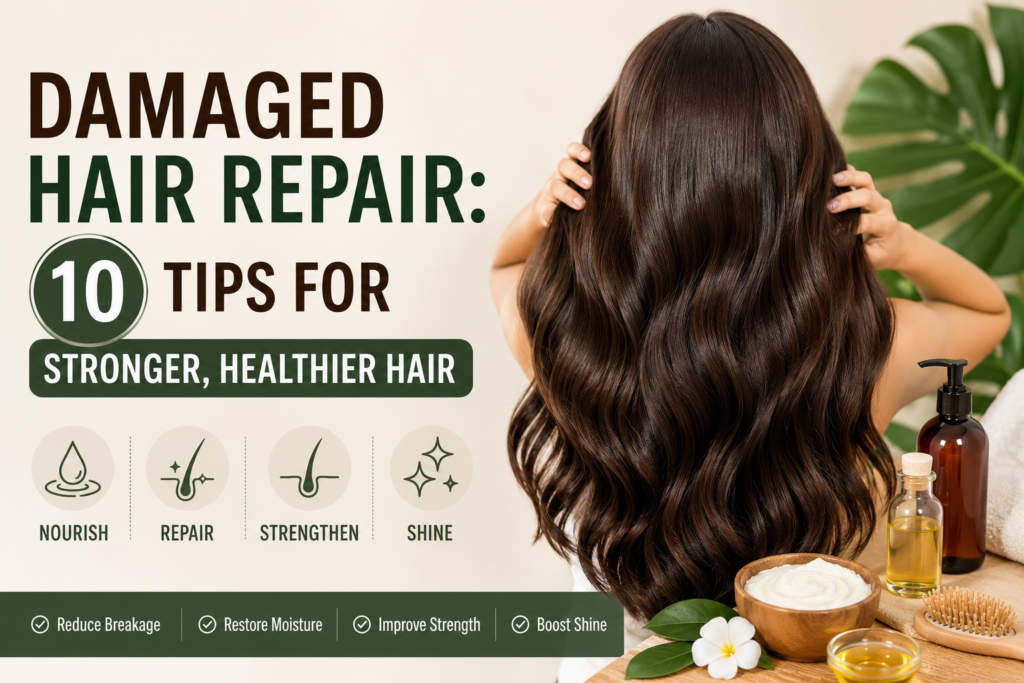
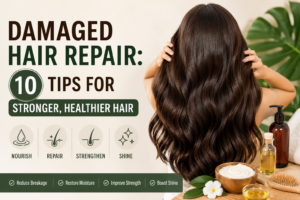
Healthy, shiny hair can boost your confidence, but daily styling, heat tools, chemical treatments, and environmental damage often leave hair looking dry, brittle, and lifeless. The good news is that damaged hair repair is possible with the right routine, quality products, and healthy habits.
Whether your hair has been damaged by bleaching, coloring, heat styling, or everyday wear and tear, taking small but consistent steps can significantly improve its appearance and strength over time. While severely damaged hair cannot be completely reversed, proper care can help reduce breakage, restore moisture, and support healthier hair growth.
In this guide, you’ll discover practical damaged hair repair tips backed by hair care best practices, along with product recommendations and lifestyle changes that can help you achieve smoother, shinier, and healthier-looking hair.
Want to support healthier, stronger hair from the roots? Read our guide on Hair Growth Tips: How to Grow Thicker, Healthier Hair Naturally:
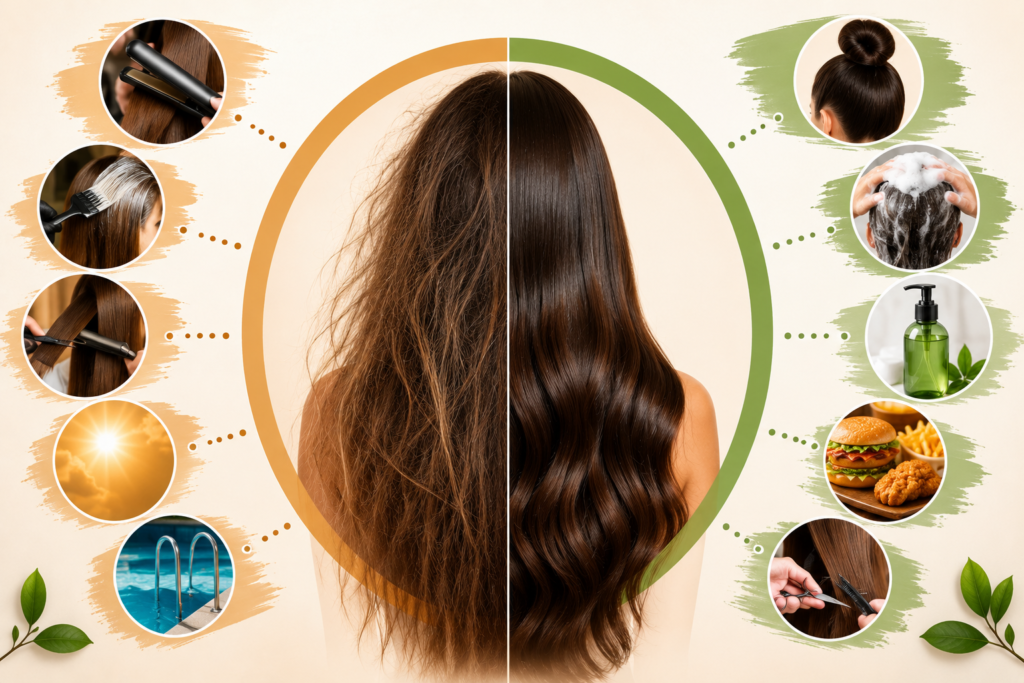
Understanding what causes hair damage is the first step toward effective damaged hair repair.
Hair consists mainly of a protein called keratin. The outer protective layer, known as the cuticle, shields the inner structure. When the cuticle becomes weakened or lifted, hair loses moisture and becomes rough, fragile, and prone to breakage.
Even everyday habits like brushing wet hair aggressively or sleeping on rough pillowcases can contribute to damage over time.
Not sure if your hair needs repair? Watch for these common signs.
Healthy hair feels soft and smooth. Damaged hair often feels dry, coarse, or straw-like.
Split ends occur when the protective layer of the hair breaks apart, causing the ends to fray.
If you notice short broken strands around your sink, shower, or hairbrush, your hair may be weakening.
Healthy hair reflects light naturally, while damaged hair often appears flat and lifeless.
Damaged cuticles create friction, making hair tangle more often.
Hair lacking moisture tends to absorb humidity, leading to unwanted frizz.
One of the fastest ways to support damaged hair repair is by limiting heat exposure.
Flat irons, curling irons, and blow dryers can strip moisture from your hair, leaving it weak and brittle.
Reducing heat damage allows your hair to retain moisture and helps minimize breakage.
Hydration is essential for repairing dry, damaged hair.
Look for shampoos containing ingredients like:
Avoid shampoos with harsh sulfates if your hair feels extremely dry.
A gentle cleansing routine helps preserve your scalp’s natural oils while improving hair softness.
Conditioner helps smooth the hair cuticle, reducing friction and preventing future breakage.
Apply conditioner from the mid-lengths to the ends after every wash.
For extra nourishment, choose conditioners containing:
A weekly deep conditioning treatment provides intense hydration for dry, damaged strands.
Deep conditioning masks often contain concentrated nourishing ingredients that penetrate the hair shaft more effectively than regular conditioners.
Leave the mask on for the recommended time to maximize its benefits.
Split ends cannot be permanently repaired.
While certain products can temporarily seal them, trimming remains the most effective solution.
Aim for a trim every 6 to 8 weeks to keep your hair looking healthier and prevent splits from traveling upward.
Your nighttime routine plays an important role in damaged hair repair. Tossing and turning while you sleep can create friction that leads to tangles, frizz, and breakage.
These small changes help reduce unnecessary stress on your hair and preserve moisture overnight.
Hair oils don’t permanently repair damaged strands, but they can improve shine, reduce frizz, and protect hair from further moisture loss.
Some of the best oils include:
Apply a few drops to the mid-lengths and ends of your hair instead of the roots if your hair becomes oily easily.
Tip: Less is more. Using too much oil can weigh your hair down.
Healthy hair starts from within. A balanced diet provides the nutrients your hair needs to grow stronger and stay healthy.
Focus on foods rich in:
Examples include:
Staying hydrated also helps support healthy-looking hair and scalp.
Frequent coloring, bleaching, relaxing, or perming can weaken the hair shaft over time.
If possible:
Giving your hair time to recover is one of the best ways to support damaged hair repair.
Hair is most fragile when it’s wet.
Instead of pulling through tangles, gently detangle your hair using a wide-tooth comb or a detangling brush.
Gentle brushing helps reduce breakage and keeps your hair looking smoother.
Choosing products with the right ingredients can make a noticeable difference.
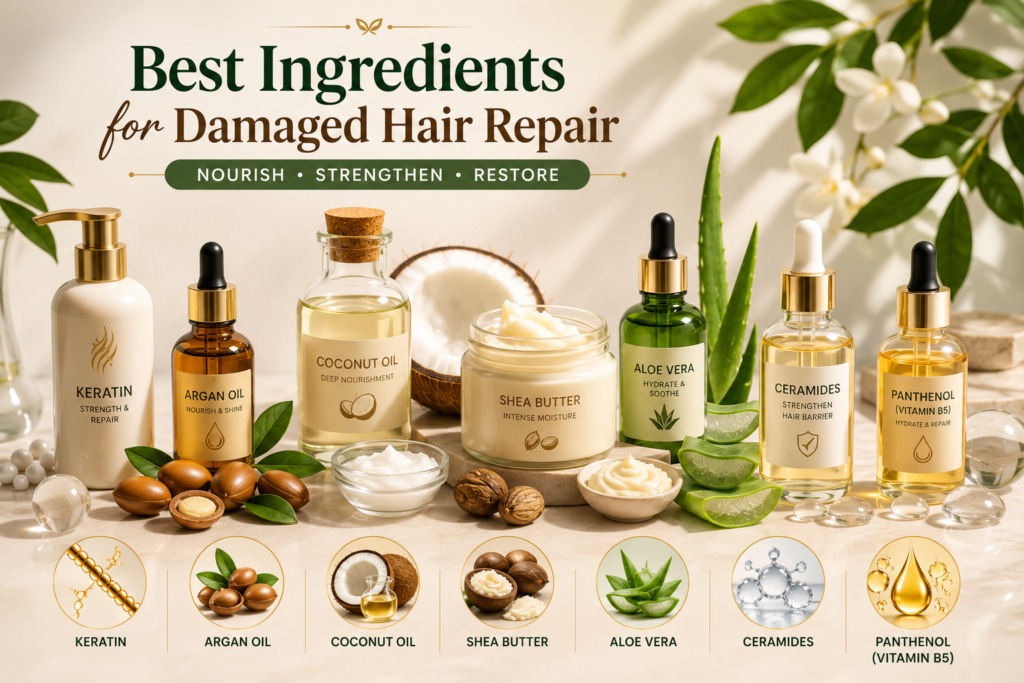
Keratin helps strengthen the hair and temporarily smooth damaged areas, making hair feel softer and more manageable.
Rich in antioxidants and vitamin E, argan oil helps moisturize dry hair while adding shine.
Coconut oil can penetrate the hair shaft better than many other oils, helping reduce protein loss in damaged hair.
Shea butter deeply nourishes dry strands and helps reduce frizz.
Aloe vera hydrates both the scalp and hair while helping soothe dryness and irritation.
Ceramides help reinforce the hair’s protective barrier, improving moisture retention.
Panthenol attracts moisture and improves the appearance of dry, brittle hair.
Sometimes everyday habits slow down damaged hair repair without us realizing it.
Avoid these common mistakes:
Replacing these habits with healthier alternatives can significantly improve your hair over time.
If your hair is severely damaged, professional treatments may provide additional support.
These treatments smooth the hair and reduce frizz, although results are temporary.
Bond-building products help strengthen weakened hair bonds after chemical processing or bleaching.
Salon-quality conditioning treatments deliver concentrated moisture and nourishment.
Routine trims remove split ends before they continue traveling up the hair shaft.
Remember: No treatment can permanently repair dead hair. The goal is to improve its appearance, reduce breakage, and protect new healthy growth.
Following a consistent routine is one of the easiest ways to maintain healthier hair.
Small daily habits often produce better long-term results than occasional intensive treatments.
For more expert-backed hair care recommendations, visit the American Academy of Dermatology’s hair care guide:
Hair that has already been damaged cannot fully heal because it is made of dead protein cells. However, a proper damaged hair repair routine can improve your hair’s appearance, reduce breakage, restore moisture, and prevent further damage.
The best treatment depends on the cause of the damage. For most people, using a moisturizing shampoo, deep conditioning weekly, limiting heat styling, and applying nourishing hair oils can significantly improve damaged hair over time.
You may notice healthier-looking hair within a few weeks of following a consistent routine. However, severely damaged hair may take several months to improve, especially if you’re growing out chemically treated or heat-damaged hair.
Following a consistent damaged hair repair routine can make a noticeable difference in the health and appearance of your hair. While damaged strands cannot be permanently repaired, proper care can reduce breakage, improve moisture, and restore softness and shine.
Simple habits like using nourishing products, reducing heat styling, trimming split ends, and eating a nutrient-rich diet all contribute to stronger, healthier-looking hair over time.
Patience is essential. Small daily improvements often lead to long-lasting results, helping you achieve hair that looks healthier and feels easier to manage.
Healthy hair starts with consistent care and informed choices. At GlowHabit, we’re committed to sharing trusted beauty and wellness tips that help you look and feel your best.
✨ Explore more expert-backed guides on hair care, skincare, and self-care to build a routine that truly works for you.
Read more on GlowHabit and take the next step toward healthier, more beautiful hai