Introduction
A little body-care ritual can make an ordinary shower feel more relaxing. If you enjoy making simple beauty products at home, DIY body scrubs are an easy project to explore. With ingredients such as fine sugar, finely ground coffee, and plain oats, you can prepare small batches without buying a collection of specialty products.
A body scrub uses gentle friction to loosen some dead skin cells from the surface. The right recipe should feel comfortable, not rough or painful. In this guide, you’ll find seven simple recipes, instructions for using them carefully, and practical advice on choosing ingredients and avoiding irritation.
Table of Contents
What Is a Homemade Body Scrub?
A homemade body scrub is a mixture made with a textured ingredient and a base that helps it spread across the skin. This DIY body scrub format is easy to customize, but the ingredients still need to suit your skin. Fine sugar, finely ground oats, and finely ground coffee are common textured ingredients. Oils or other suitable bases help hold the mixture together.
The textured ingredient provides physical exfoliation by loosening some dead skin cells from the outer surface. It does not reach deep into the skin, remove scars, or treat medical skin conditions. Natural ingredients are not automatically gentle, so texture, pressure, and individual sensitivities matter.
Unlike store-bought products, homemade scrubs let you choose the ingredients and adjust the texture. You can adapt a DIY body scrub by leaving out ingredients that do not suit your skin.
Benefits and Limitations
Used gently and occasionally, a body scrub may help. Keep the pressure light whenever you use a DIY body scrub:
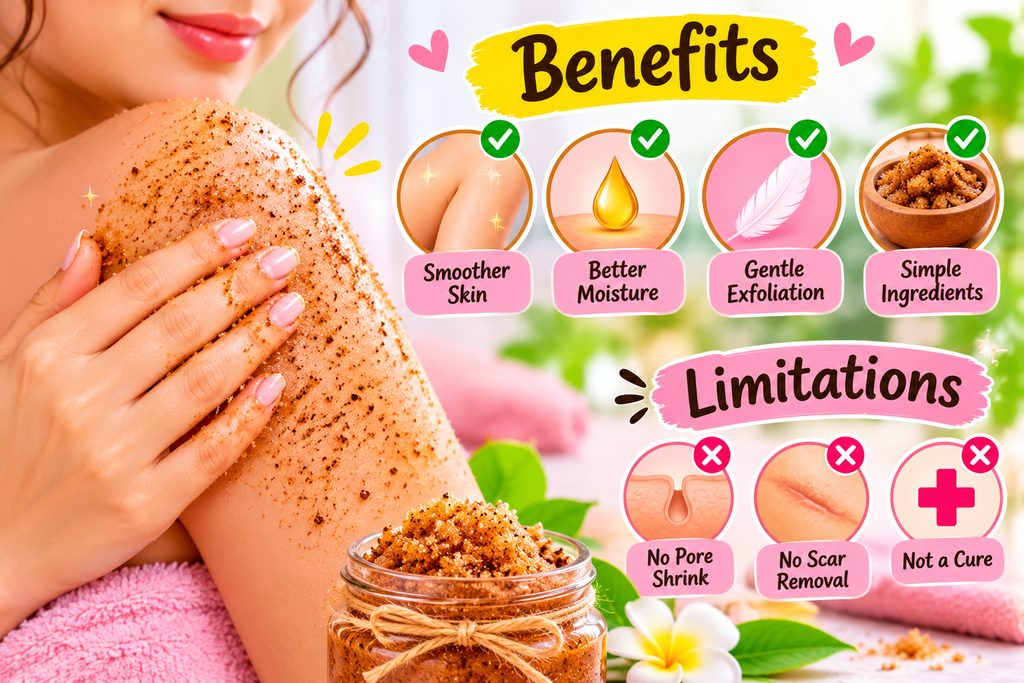
- Lift loose surface flakes: Gentle exfoliation can remove some dead skin cells from the outermost layer.
- Leave skin feeling smoother: Removing surface buildup may temporarily improve how skin feels.
- Make moisturizing easier: After rinsing, applying a familiar body moisturizer helps reduce dryness.
- Keep ingredients simple: You can choose a short recipe and avoid fragrances or ingredients you do not tolerate.
- Make self-care enjoyable: Preparing a small batch can be a simple addition to a shower routine.
There are limits, too. Scrubs cannot permanently shrink pores, erase scars, cure keratosis pilaris, or treat acne. Too much friction can damage the skin barrier and cause redness, stinging, or dryness. If you have eczema, psoriasis, persistent irritation, or another skin condition, ask a qualified health professional before using physical exfoliants.
7 Easy DIY Body Scrub Recipes
Make only a small amount at a time, use clean and dry utensils, and avoid adding water to a container you plan to keep. A DIY body scrub should be made with clean tools and used with care. Patch-test a new mixture on a small area first. If it causes burning, itching, or redness, rinse it off and do not use it again.
1. Classic Sugar and Coconut Oil Scrub
Best for: A simple, oil-based body-care recipe.
Ingredients:
- 1/2 cup fine granulated sugar
- 2 tablespoons coconut oil, softened
- 1 teaspoon honey (optional)
Instructions:
- Place the sugar in a clean, dry bowl.
- Add the coconut oil and stir until the mixture is evenly combined.
- Mix in the honey if you choose to use it.
- Transfer a single-use portion to your hand or a small clean dish.
How to use: On damp body skin, gently glide a small amount over your arms or legs using light circular movements. Rinse thoroughly. Do not use on your face, freshly shaved skin, cuts, sunburn, or irritated areas.
Fine sugar is preferable to large crystals because a coarse texture can feel harsh. This DIY body scrub uses fine sugar rather than coarse crystals. Coconut oil may not suit everyone and can leave a slippery film, so take care when rinsing the shower floor.
“If you’re dealing with strawberry legs, read our guide on how to get rid of strawberry legs.”
2. Coffee and Olive Oil Scrub
Best for: People who enjoy a coffee-based body-care recipe.
Ingredients:
- 1/2 cup finely ground coffee
- 2 tablespoons olive oil
- 1 tablespoon fine brown sugar (optional)
Instructions:
- Add the coffee grounds to a clean bowl.
- Stir in the olive oil until the grounds are lightly coated.
- Add brown sugar only if you want a slightly different texture.
- Mix well and prepare only the amount you plan to use.
How to use: Apply gently to damp arms or legs, then rinse completely. Avoid vigorous rubbing. Coffee grounds can be messy, so check that the shower drain is clear of residue after rinsing.
Coffee does not need to be used roughly to exfoliate. Choose a fine grind and skip this recipe if the particles feel scratchy on your skin. This DIY body scrub is best kept simple, with only a few familiar ingredients.
3. Brown Sugar and Honey Scrub
Best for: A simple mixture with a softer-feeling sugar texture.
Ingredients:
- 1/2 cup fine brown sugar
- 1 tablespoon honey
- 1 tablespoon olive oil
Instructions:
- Combine the brown sugar and honey in a clean bowl.
- Add the olive oil gradually.
- Stir until the ingredients form a thick, spreadable mixture.
- Use a small amount immediately.
How to use: Smooth a little over damp arms or legs with very light pressure. Rinse with lukewarm water and apply your usual moisturizer.
Honey can cause reactions in some people, and this food-based mixture is not shelf-stable. Make it fresh for one use and discard leftovers. Treat this DIY body scrub as an occasional body-care step, not a daily treatment.
4. Oatmeal and Yogurt Polish
Best for: People who prefer a less gritty texture.
Ingredients:
- 1/4 cup plain oats, finely ground
- 1 tablespoon plain, unsweetened yogurt
- 1 teaspoon honey (optional)
Instructions:
- Grind the oats into a fine powder.
- Mix the powder with the yogurt in a clean bowl.
- Add honey if desired and stir until creamy.
- Prepare just enough for one application.
How to use: Spread a thin layer over damp body skin and move your fingertips gently across the surface. Rinse thoroughly without scrubbing hard.
This recipe is a soft-textured wash-off polish, not a treatment for sensitive-skin conditions. Yogurt is perishable, so do not store leftovers. This DIY body scrub recipe should be prepared fresh because it contains yogurt. Skip it if dairy ingredients irritate your skin.
5. Fine Salt and Olive Oil Scrub
Best for: People whose skin tolerates a more textured scrub.
Ingredients:
- 1/4 cup finely ground salt
- 2 tablespoons olive oil
Instructions:
- Put the salt in a clean, dry bowl.
- Add olive oil a little at a time.
- Stir until the salt is lightly coated.
- Use a small amount and discard the remainder if it becomes wet or contaminated.
How to use: If you choose to try it, use it sparingly on a small area of thicker, healthy body skin, such as the feet. Rinse thoroughly. Do not use it on delicate areas, freshly shaved skin, cracks, cuts, or irritated skin.
Salt can sting broken skin and may be too abrasive for many people. Skip this recipe if you have sensitive or easily irritated skin; a softer option is a better choice. If the texture feels scratchy, do not use this DIY body scrub.
6. Aloe Vera and Fine Sugar Scrub
Best for: A simple gel-based mixture.
Ingredients:
- 1/4 cup fine sugar
- 2 tablespoons plain aloe vera gel
- 1 teaspoon jojoba oil (optional)
Instructions:
- Add the fine sugar to a clean bowl.
- Stir in the aloe vera gel.
- Add jojoba oil if you already know your skin tolerates it.
- Mix until combined and use immediately.
How to use: Gently spread a small amount over damp arms or legs, then rinse completely. Do not apply to broken or irritated skin.
Choose a plain aloe product without added fragrance if possible. Aloe products can still cause reactions, so patch-test first. Because this mixture contains a water-based gel, prepare it fresh and discard leftovers. This DIY body scrub is not suitable for broken, freshly shaved, or irritated skin.
7. Almond Oil and Fine Sugar Scrub
Best for: People who prefer an oil-based mixture.
Ingredients:
- 1/2 cup fine granulated sugar
- 2 tablespoons sweet almond oil
Instructions:
- Place the sugar in a clean, dry bowl.
- Add the almond oil and stir until evenly mixed.
- Take out only the amount needed for one use.
- Keep water out of any remaining dry mixture and discard it if its appearance or smell changes.
How to use: Apply a small amount to damp arms or legs with light pressure. Rinse well and take care because oil can make the shower floor slippery.
Avoid almond oil if you have an almond or tree-nut allergy. If you are unsure whether an ingredient is suitable for you, leave it out rather than experimenting on irritated skin. Use this DIY body scrub only if you already know you tolerate its ingredients.
How to Use a Body Scrub Safely
A gentle technique matters as much as the ingredients. Follow these steps:
- Wet your skin: Start with lukewarm water rather than very hot water.
- Use a small amount: Scoop the mixture with clean, dry hands or a clean spoon.
- Apply light pressure: Move your fingertips gently over a small area. Do not grind the particles into your skin.
- Avoid sensitive areas: Keep the mixture away from your face, intimate areas, cuts, rashes, sunburn, and freshly shaved skin.
- Rinse thoroughly: Remove all remaining particles and oils.
- Moisturize: Apply a body moisturizer you already tolerate while your skin is comfortable and slightly damp.
A scrub should not hurt. If a DIY body scrub feels rough or uncomfortable, rinse it off and choose a gentler approach. Stop if you notice burning, stinging, persistent redness, or tenderness. Do not try to scrub away bumps or rough patches aggressively.For more guidance, read how to safely exfoliate at home.
How Often Should You Exfoliate?
There is no schedule that suits everyone. Skin sensitivity, the texture of the product, and other products in your routine all affect how often physical exfoliation is appropriate.
If your skin is healthy and you are new to scrubbing, start infrequently—such as once a week—and see how it responds. Some people may need to exfoliate less often or avoid physical scrubs altogether. Do not exfoliate every day, and do not use a scrub on skin that is already dry, inflamed, sunburned, or damaged.
If you experience ongoing irritation, stop using the scrub. If you have a skin condition or are unsure whether exfoliation is appropriate, ask a dermatologist or another qualified health professional.
Common Mistakes to Avoid
- Choosing coarse particles: Large salt crystals or rough coffee grounds may scratch or irritate skin.
- Scrubbing with too much pressure: More friction does not mean better results.
- Exfoliating too often: Repeated physical exfoliation can weaken the skin barrier.
- Using lemon juice: It can irritate skin and may increase the risk of a reaction with sun exposure.
- Adding baking soda: Its high pH can disrupt the skin’s natural protective environment.
- Ignoring allergies: Avoid ingredients you are allergic or sensitive to, including nut oils.
- Keeping wet mixtures for too long: Homemade recipes without tested preservatives can become contaminated.
- Using a scrub on damaged skin: Avoid cuts, rashes, sunburn, and active irritation.
Keep recipes simple and make fresh, small batches. A longer ingredient list does not make a scrub more effective.
Frequently Asked Questions
A simple fine-sugar and oil mixture is a common starting point for people who tolerate its ingredients. Use a small amount with gentle pressure, rinse thoroughly, and moisturize afterward. No scrub is right for every skin type.
Daily physical exfoliation is unnecessary for most people and can cause irritation. If your skin tolerates exfoliation, start infrequently and adjust based on how it responds. Stop if you notice redness, burning, or tenderness.
Finely ground coffee can provide physical exfoliation, but coarse grounds may feel abrasive. Use light pressure and avoid irritated or sensitive areas. Coffee scrubs are not proven treatments for cellulite or other skin conditions.
Yes. After rinsing, apply a body moisturizer that you already know your skin tolerates. This can help reduce the dry feeling that sometimes follows washing and exfoliation
Storage depends on the ingredients and whether water can enter the container. Mixtures containing yogurt, aloe gel, or other water-based ingredients should be prepared fresh and discarded after use. Even oil-and-sugar mixtures made at home have no tested shelf life, so make small batches, keep water out, and discard anything that changes in smell, color, or texture.
Conclusion
Homemade body care can be simple, but gentle use is essential.Make it part of a simple self-care routine. These seven recipes offer different textures and ingredient combinations, from fine sugar and oil to finely ground oats. Choose ingredients your skin already tolerates, prepare small batches, and avoid scrubbing irritated or damaged areas.
The goal is not to exfoliate as much as possible. It is to keep your routine comfortable and avoid unnecessary friction. Which recipe would you try first? Choose a simple option, patch-test it, and enjoy a thoughtful moment in your body-care routine.