Have you ever picked up your phone to check one notification, only to realize that half an hour has passed while scrolling through social media? You are not alone. Smartphones help us communicate, learn, work, and stay connected, but they can also make it easy to lose track of time.
Constant notifications, endless scrolling, and the habit of checking our phones during every quiet moment can distract us from the things that matter. We may spend less time enjoying hobbies, connecting with loved ones, or simply relaxing without a screen.
That is where a digital detox can help. It does not mean giving up your phone completely or avoiding technology forever. Instead, it means becoming more intentional about how you use your devices and creating healthier screen time habits.
In this guide, you will discover 10 simple ways to spend less time on your phone, create a realistic digital detox routine, and make more room for meaningful activities in your everyday life.
Table of Contents
- What Is a Digital Detox?
- Why Is a Digital Detox Important?
- Signs You May Need a Digital Detox
- 10 Simple Ways to Spend Less Time on Your Phone
- How to Create a Daily Digital Detox Routine
- Common Digital Detox Mistakes to Avoid
- Frequently Asked Questions
- Conclusion: Build a Healthier Relationship With Your Phone
What Is a Digital Detox?
A digital detox is a period when you intentionally reduce your use of digital devices, such as smartphones, tablets, computers, and social media platforms. The goal is to take a break from unnecessary screen time and create a healthier balance between online and offline activities.
For example, you might stop checking social media during meals, leave your phone outside your bedroom at night, or spend the first 30 minutes of your morning without scrolling.
A digital detox does not have to involve turning off every device for an entire weekend. You can start with a few minutes of screen-free time and gradually develop habits that fit your lifestyle.
The idea is not to treat technology as something bad. It is to use it when it serves a purpose instead of reaching for your phone automatically whenever you feel bored, stressed, or restless.
Why Is a Digital Detox Important?
Technology makes many parts of daily life easier, but phone habits can become unhelpful when they interfere with sleep, concentration, relationships, or other priorities.
The American Psychological Association recommends practical steps such as turning off unnecessary notifications, being present with other people, and making time to recharge away from devices. You can explore its guidance on healthy technology use for additional information.
Here are some reasons to consider a digital detox.
1. It Can Help You Focus
Frequent notifications and phone checks can interrupt tasks and make it harder to concentrate. Reducing unnecessary distractions may help you give more attention to studying, working, reading, or completing everyday responsibilities.
2. It May Support Better Sleep Habits
Scrolling through videos or reading messages late at night can keep you mentally engaged when you should be winding down. Setting aside screen-free time before bed can help you establish a more relaxing evening routine.
3. It Creates More Time for Yourself
Small scrolling sessions can add up throughout the day. Spending less time on your phone may leave more room for exercise, hobbies, preparing meals, or enjoying a quiet moment.
4. It Encourages Meaningful Connections
Checking your phone during conversations can distract you from the people around you. Phone-free meals and social gatherings can create opportunities to listen carefully and be more present.
5. It Helps You Understand Your Habits
Tracking your screen time can reveal which apps consume the most attention. Once you understand your habits, you can decide which activities deserve your time and which ones you would like to reduce.
A digital detox will not solve every problem, and its benefits vary between individuals. However, creating intentional boundaries can help you build a routine that better reflects your priorities.
Signs You May Need a Digital Detox
You do not need to wait until phone use feels overwhelming to make a change. Everyday habits can help you recognize when it might be time to reconsider your screen time.
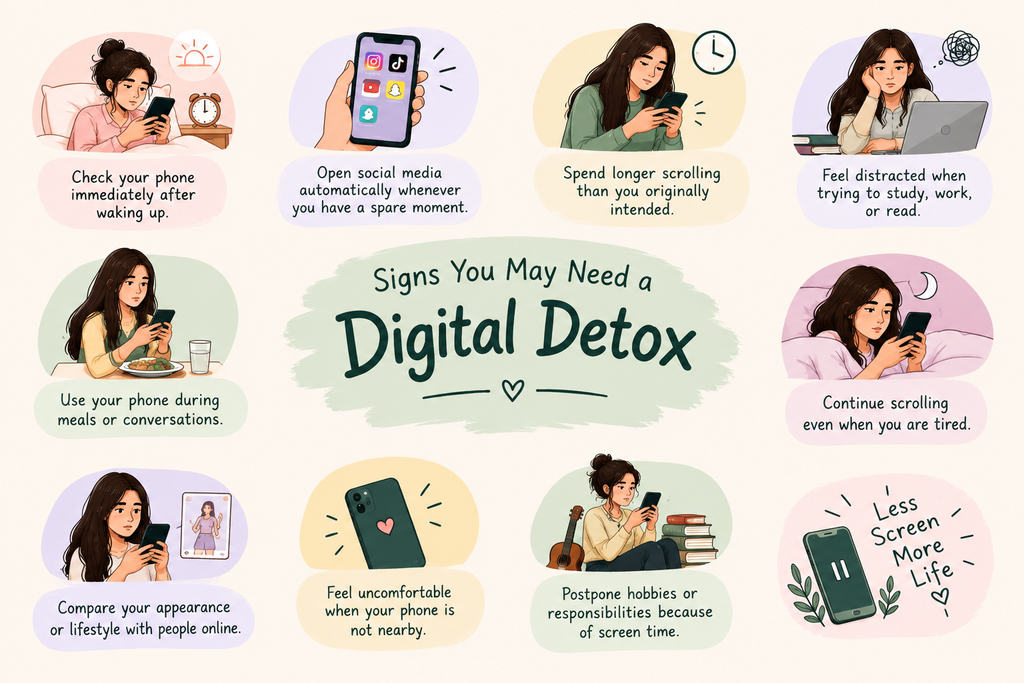
You may benefit from a digital reset if you:
- Check your phone immediately after waking up.
- Open social media automatically whenever you have a spare moment.
- Spend longer scrolling than you originally intended.
- Feel distracted when trying to study, work, or read.
- Use your phone during meals or conversations.
- Continue scrolling even when you are tired.
- Compare your appearance or lifestyle with people online.
- Feel uncomfortable when your phone is not nearby.
- Postpone hobbies or responsibilities because of screen time.
These habits do not automatically mean you have a phone addiction. They are simply opportunities to reflect on whether your current digital routine is working for you.
10 Simple Ways to Spend Less Time on Your Phone
You do not need complicated rules or expensive apps to start a digital detox. Small, consistent changes can help you become more intentional about how you use your phone.
1. Check Your Daily Screen Time
Before changing your habits, find out how much time you currently spend on your phone.
Most smartphones include built-in tools that show daily usage, app activity, and how often you pick up your device.
On an iPhone, open Settings → Screen Time. On many Android phones, open Settings → Digital Wellbeing & parental controls. Menu names may vary by device.
Look at your most-used apps and consider which ones are necessary and which ones tend to distract you.
For example, you might discover that several short social media sessions are taking up more time than you realized. Start by reducing that time gradually instead of trying to change everything overnight.
2. Set Realistic Screen Time Limits
Once you understand your habits, choose one or two apps where you would like to spend less time.
If you usually spend an hour scrolling through a social media app, try reducing that time by 10 or 15 minutes initially. As the new habit becomes easier, you can adjust the limit.
Use your phone’s built-in app limits or set a timer when necessary. Remember that screen time spent working, learning, navigating, and communicating is different from time spent scrolling without a purpose.
The goal is not to achieve the lowest possible screen time. It is to make more room for activities you value.
3. Turn Off Unnecessary Notifications
Every alert can create another reason to pick up your phone. Social media likes, promotional messages, shopping updates, and nonessential notifications may interrupt you throughout the day.
Open your notification settings and turn off alerts that do not require your immediate attention.
Keep important calls, essential messages, calendar reminders, and work-related notifications enabled when necessary.
You can also use Focus mode or Do Not Disturb during study sessions, meals, reading time, or other activities that require your attention.
Fewer interruptions can make it easier to stay focused without feeling that you must respond to everything immediately.
4. Avoid Using Your Phone First Thing in the Morning
Checking messages and social media immediately after waking up can make your morning feel rushed before your day has properly started.
Instead, try keeping your phone aside for the first 15 to 30 minutes after waking up.
Use that time to drink water, wash your face, make your bed, stretch, prepare breakfast, or plan your priorities for the day.
If you need your phone for an alarm or an urgent responsibility, that is completely fine. The idea is to avoid opening distracting apps automatically before you have decided what you want to accomplish.
A calm morning routine can help you begin the day with more intention.
5. Create Phone-Free Zones at Home
Designating certain places as phone-free areas makes it easier to disconnect without relying on willpower every minute.
Try these simple boundaries:
- Keep phones away from the dining table during meals.
- Avoid scrolling while spending time with family or friends.
- Keep your workspace free from unnecessary phone distractions.
- Charge your phone away from your bed when practical.
Choose boundaries that work for your household and responsibilities. If you need to remain reachable for an emergency, adjust your settings to allow important calls or contacts.
Over time, these small boundaries can help you separate screen time from rest, conversations, and other everyday activities.
6. Replace Scrolling With Enjoyable Activities
One reason it can be difficult to reduce phone use is that scrolling fills empty moments. If you remove that habit without finding something else to do, you may quickly return to it.
Instead, prepare a short list of enjoyable alternatives.
You could read a few pages of a book, take a walk, try a new recipe, organize a small area of your home, practice a creative hobby, or spend time outdoors.
If you enjoy self-care, you might create a relaxing routine with skincare, journaling, or gentle stretching. Explore our guide to a self-care routine for women for more ideas.
Choose activities that feel enjoyable rather than treating every screen-free moment as another task to complete.
7. Make Social Media Less Tempting
Social media apps are often designed to make it easy to continue scrolling. You can make them less distracting by changing how they appear and when you access them.
Try moving social media apps away from your home screen, logging out after use, or removing apps you rarely need. You can also unfollow accounts that consistently make you feel stressed, inadequate, or overwhelmed.
Another useful habit is to decide why you are opening an app before you tap it. Perhaps you want to reply to a message, publish a post, or check a specific update.
Complete that task and leave the app instead of automatically moving to another feed.
You do not have to delete every social media account to build a healthier relationship with technology.
8. Keep Your Phone Away During Work and Study Sessions
If you often reach for your phone while working or studying, create a simple routine that reduces the temptation.
Put your device in a bag, drawer, or another location where you cannot easily grab it. Then work on one task for a manageable period, such as 25 minutes, before taking a short break.
During that break, stretch, drink water, or walk around instead of automatically opening social media.
If you need your phone for educational apps, research, or work, use the tools you need and silence unrelated notifications.
The goal is to make it easier to concentrate on one activity at a time.
9. Establish a Relaxing Bedtime Routine
Your phone does not have to be the final thing you look at every night.
Try setting a personal screen-time cutoff about 30 to 60 minutes before bed, if your schedule allows. Use that time to prepare for tomorrow, read a physical book, listen to calming audio without browsing, or follow a relaxing skincare routine.
Charge your phone away from your bed if possible. If you use it as an alarm, consider a separate alarm clock or place your device far enough away that you cannot comfortably scroll while lying down.
You may need to experiment to find a routine that works for you. The important part is creating a clear transition between being online and preparing to sleep.
10. Try a Short Digital Detox Challenge
Once you have established a few basic habits, try a simple digital detox challenge.
Start with one phone-free meal each day or 30 minutes without social media. When that feels manageable, add another screen-free period, such as a morning walk or the hour before bedtime.
You can also try a half-day digital reset during a weekend, provided you can still handle essential responsibilities and stay reachable when needed.
During your break, notice how you feel and what you choose to do with the extra time. If a particular boundary feels unrealistic, adjust it instead of abandoning your efforts completely.
Consistency matters more than completing an extreme challenge.
How to Create a Daily Digital Detox Routine
A digital detox becomes easier when it fits naturally into your day. You do not need to follow a strict schedule or avoid every screen.
Here is an example of a simple routine you can adapt to your lifestyle.
| Time of day | Digital detox habit |
|---|---|
| Morning | Avoid social media for the first 15–30 minutes after waking. |
| During work or study | Silence unnecessary notifications and focus on one task at a time. |
| Mealtimes | Put your phone aside while eating. |
| Afternoon | Take a short walk or break without scrolling. |
| Evening | Spend time on a hobby, reading, or connecting with loved ones. |
| Before bed | Reduce phone use for 30–60 minutes before sleeping, when practical. |
You can adjust this schedule to suit your work hours, family responsibilities, and personal needs.
A Simple Seven-Day Digital Detox Plan
If you are unsure where to begin, use this seven-day plan to build your habits gradually.
Day 1: Observe your screen time. Check your daily usage and identify your three most distracting apps.
Day 2: Turn off unnecessary notifications. Keep important calls and messages available.
Day 3: Create a phone-free morning. Spend the first 15 minutes of your day away from social media.
Day 4: Enjoy a screen-free meal. Put your phone aside while eating.
Day 5: Replace one scrolling session. Use that time for reading, walking, journaling, or another enjoyable activity.
Day 6: Create a bedtime boundary. Put your phone away before going to sleep.
Day 7: Review your progress. Check whether your screen time has changed and decide which habits you want to continue.
You do not have to complete every step perfectly. If you miss a day, simply continue with the next step. The purpose is to build sustainable habits rather than create another source of pressure.
Common Digital Detox Mistakes to Avoid
Reducing screen time can take practice, especially if checking your phone has become part of your daily routine. Avoid these common mistakes to make the process more manageable.
Trying to Quit Everything Overnight
Deleting every app and refusing to use your phone may feel motivating at first, but it can be difficult to maintain. Start with a few manageable boundaries and build from there.
Setting Unrealistic Goals
Reducing several hours of screen time immediately may not suit your responsibilities. Choose a realistic starting point and adjust your goals as your habits change.
Ignoring the Reason You Scroll
People often reach for their phones when they feel bored, lonely, stressed, or tired. Notice what triggers your scrolling and choose an alternative that meets that need.
For example, if you scroll whenever you feel overwhelmed, a short walk or a few minutes of quiet breathing may be a helpful first step.
Treating All Screen Time as Bad
Technology can support learning, work, creativity, entertainment, and meaningful relationships. Focus on unnecessary or unhelpful phone use rather than trying to eliminate every useful digital activity.
Giving Up After One Difficult Day
Changing a habit takes time. If you spend longer on your phone than planned, avoid criticizing yourself. Review what happened, adjust your approach, and try again the following day.
A successful digital detox is not about perfection. It is about making conscious choices more often.
Frequently Asked Questions
A digital detox is a period when you intentionally reduce your use of smartphones, social media, and other digital devices. It helps you create healthier technology habits and make more time for activities outside your screens.
Start by checking your daily screen time, setting realistic app limits, turning off unnecessary notifications, and keeping your phone away during meals and bedtime. Replacing scrolling with enjoyable offline activities can also help.
There is no single ideal duration. You can begin with 15 to 30 minutes of screen-free time each day and gradually increase it. Some people prefer phone-free meals or evenings, while others enjoy occasional half-day breaks.
A digital detox may help reduce interruptions, support better sleep habits, create more time for hobbies, encourage in-person connections, and improve awareness of your phone-use patterns. Individual experiences will vary.
Yes. You can keep your accounts and still reduce unnecessary screen time. Try setting app limits, muting nonessential notifications, scheduling specific times to check social media, and avoiding scrolling during important activities.
Conclusion: Build a Healthier Relationship With Your Phone
Learning how to spend less time on your phone does not require giving up technology or completely changing your lifestyle. It begins with noticing your habits, identifying unnecessary distractions, and making small changes that fit your everyday routine.

Start with one simple step today. Turn off a few notifications, enjoy a meal without your phone, or spend the first 15 minutes of your morning away from social media. As these habits become easier, add new boundaries that help you protect your time and attention.
Remember, a digital detox is not about avoiding technology altogether. It is about making sure technology supports your life instead of taking up more time than you intended.
Ready to make more time for yourself? Choose one screen-free habit today and build a healthier, more balanced routine one day at a time.