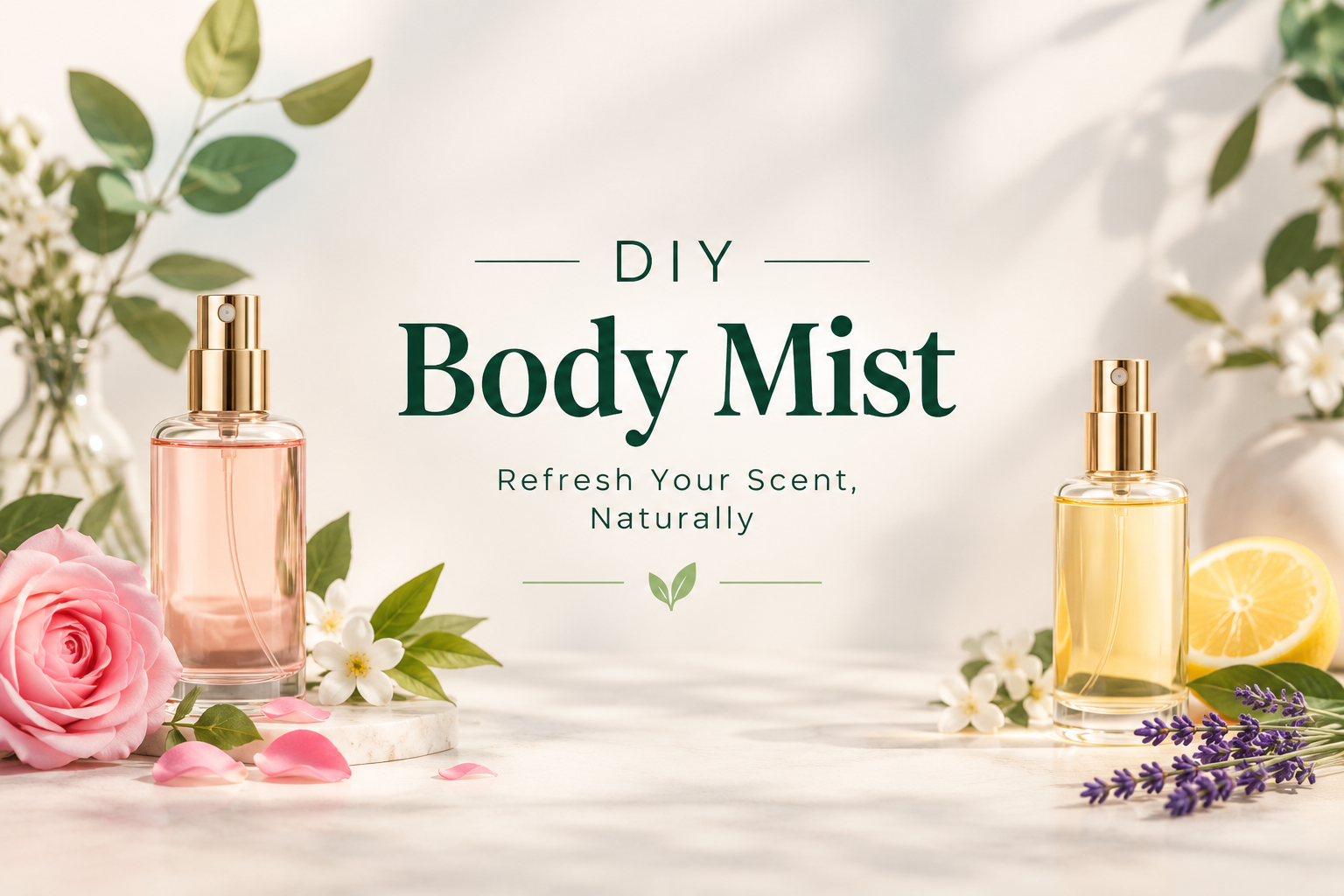
Have you ever wished you could create a fragrance that smells exactly the way you like without spending money on expensive body sprays? Making your own DIY body mist can be a fun way to explore different scents and create a personalized fragrance at home.
Whether you love fresh citrus, sweet vanilla, delicate florals, or warm, cozy fragrances, a homemade body mist gives you the opportunity to experiment with your favorite scent profiles.
The best part is that you don’t need an elaborate beauty collection to get started. With a few suitable ingredients, the right spray bottle, and some basic fragrance knowledge, you can create a simple body mist that fits your personal style.
However, making a body mist safely involves more than mixing water and fragrance oils. Ingredients must be compatible, suitable for skin contact, and used at appropriate concentrations.
In this guide, you’ll learn how to make a DIY body mist, choose fragrance ingredients, customize your scent, and store your finished product properly.
Table of Contents
1. What Is a DIY Body Mist?
A DIY body mist is a lightweight fragrance spray that you prepare at home using ingredients suitable for cosmetic use.
Unlike some concentrated perfumes, body mists are generally designed to provide a lighter fragrance experience. Their strength and longevity depend on the fragrance ingredients, concentration, and formulation.
You can customize your homemade fragrance to suit different preferences, including fresh, fruity, floral, sweet, or warm scents.
For example, you might enjoy a refreshing citrus fragrance during summer or a soft vanilla scent for a cozy evening.
A DIY body mist allows you to experiment with personal fragrance preferences while learning more about fragrance formulation.
Remember that homemade products are not automatically safer or more affordable than commercial alternatives. Your final result depends on the ingredients you choose and how carefully you prepare it.
2. Benefits of Making Your Own Body Mist
Creating a homemade fragrance can be an enjoyable beauty project, especially if you love experimenting with different scents.
Here are some reasons to try it.
Customize Your Favorite Fragrance
One of the biggest advantages of a homemade body spray is the ability to select a scent that matches your preferences.
You can explore fragrance families such as:
- Floral: Rose, jasmine, and other floral-inspired fragrances.
- Fruity: Berry, peach, and tropical fruit-inspired scents.
- Fresh: Citrus, green, and clean fragrance profiles.
- Sweet: Vanilla and other dessert-inspired fragrance notes.
- Warm: Woody, amber-inspired, and cozy fragrance profiles.
Always choose cosmetic-grade fragrance ingredients specifically suitable for the intended application.
Explore Affordable Beauty DIYs
Making your own fragrance can be an interesting alternative to purchasing multiple body sprays.
However, whether it saves money depends on the quality of your ingredients, the size of your batch, and the equipment you need.
If you already enjoy beauty DIY projects, learning basic fragrance formulation can also help you understand how different ingredients affect a product.Explore a simple self-care routine to make your daily beauty habits more enjoyable.
Create Fragrances for Different Occasions
You can experiment with different fragrance profiles for different moods and occasions.
For example, a fresh fragrance may suit daytime wear, while a warm, sweet scent might be more appealing for an evening outing.
Keep in mind that your personal preferences, the weather, and the strength of the fragrance will influence how you enjoy each scent.
3. Ingredients Needed for a DIY Body Mist
Before preparing your fragrance, gather the appropriate ingredients and equipment.
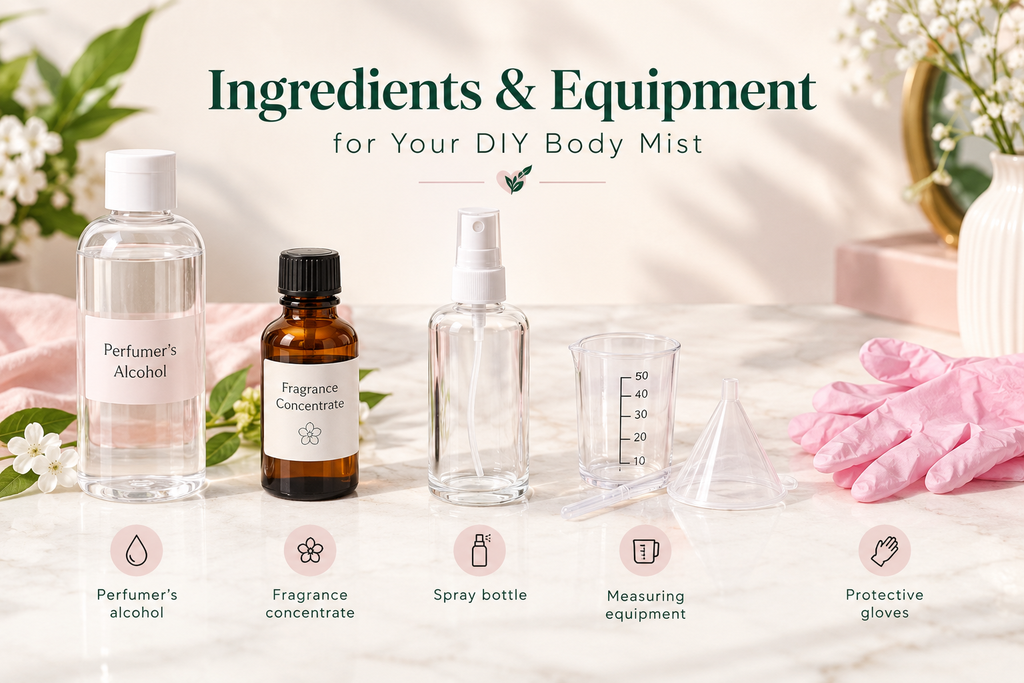
For this beginner-friendly formula, you’ll need a cosmetic-grade fragrance concentrate and perfumer’s alcohol specifically intended for making skin-applied fragrances.
Do not substitute ordinary rubbing alcohol, household alcohol, or an unidentified alcohol product. The ingredients must be appropriate for cosmetic use.
Ingredients and Equipment
| Ingredient or Equipment | Purpose |
|---|---|
| Perfumer’s alcohol | Acts as the fragrance solvent and spray base |
| Skin-safe fragrance concentrate | Provides the scent |
| Clean, compatible spray bottle | Holds and dispenses the finished product |
| Accurate measuring equipment | Helps measure ingredients correctly |
| Protective gloves | Help minimize unnecessary skin contact during preparation |
Use fragrance materials that comply with the supplier’s safety documentation and applicable requirements for the intended product.
Important Ingredient Safety
Not every fragrance oil, essential oil, or perfume ingredient is suitable for direct skin application.
Before purchasing ingredients, check that the fragrance concentrate is specifically approved for the intended use and follow its applicable International Fragrance Association (IFRA) guidance and supplier instructions.
Fragrance limits vary by ingredient and application. Never assume that a concentration is safe simply because it is commonly used in another product.
For this reason, the recipe below is a starting formula rather than a universal safety guarantee.
4. How to Make DIY Body Mist at Home
Making a simple fragrance spray involves measuring compatible ingredients, combining them carefully, and checking that the finished product is suitable for its intended use.
This formula uses perfumer’s alcohol rather than water. That distinction matters because adding water changes the formulation and can introduce additional stability and preservation requirements.
Beginner-Friendly DIY Body Mist Recipe
Ingredients for a 100 mL batch:
- 97 mL of suitable perfumer’s alcohol
- 3 mL of skin-safe fragrance concentrate, provided this concentration is permitted for the intended application
This is a nominal 3% fragrance formula. It is appropriate only when the specific fragrance concentrate’s safety documentation permits that level and the finished formulation meets the relevant requirements.
If the supplier specifies a lower maximum concentration, follow the lower limit.
Step 1: Prepare Your Workspace
Start with a clean, well-ventilated workspace away from flames, sparks, heat sources, and direct sunlight.
Perfumer’s alcohol is generally highly flammable, so keep it away from ignition sources while preparing and storing your fragrance.
Use clean, compatible equipment and avoid contaminating the ingredients.
Step 2: Measure the Fragrance Concentrate
Measure the fragrance concentrate accurately using suitable measuring equipment.
Choose a fragrance that is approved for skin-applied products rather than one intended only for candles, room sprays, or other non-skin applications.
If you are uncertain about the fragrance’s permitted concentration, consult the supplier before proceeding.
Step 3: Combine the Ingredients
Measure the perfumer’s alcohol and fragrance concentrate according to the formula.
Combine them in a suitable container and mix gently until the ingredients are evenly incorporated.
Do not add water, food coloring, or other household ingredients to this formula. They can affect the product’s compatibility, appearance, stability, and safety.
Step 4: Transfer the Mixture
Carefully transfer the mixture into a clean, compatible spray bottle.
A bottle designed for alcohol-based fragrance products is preferable because some plastics, seals, and other materials may not be compatible with alcohol.
Close the bottle securely and label it with the ingredients, concentration, and preparation date.
Step 5: Check the Finished Product
Follow the fragrance supplier’s instructions regarding mixing, maturation, clarity, and stability.
Some fragrance formulations benefit from resting before use, but there is no universal waiting period that guarantees a finished product is safe or stable.
If the mixture becomes cloudy, separates, develops an unusual odor, or shows other unexpected changes, do not use it until the issue has been properly assessed.
Important: A clear appearance and pleasant smell do not prove that a homemade fragrance is safe. Avoid selling or distributing a homemade formula without appropriate safety, stability, and regulatory assessment.
5. Best DIY Body Mist Fragrance Ideas
Choosing a fragrance is one of the most enjoyable parts of making your own body spray.
You can explore different fragrance families to discover which scents suit your preferences.
Here are five ideas to inspire your next beauty DIY project.
1. Fresh Citrus-Inspired Fragrance
Citrus-inspired fragrances often have a bright, fresh character.
Look for a cosmetic-grade fragrance concentrate featuring notes such as bergamot, mandarin, or orange.
Citrus fragrance ingredients can have different safety restrictions, particularly when certain expressed essential oils are used. Follow the supplier’s skin-use guidance rather than assuming all citrus ingredients are interchangeable.
2. Soft Vanilla Fragrance
Vanilla-inspired scents are popular among people who enjoy warm, sweet fragrance profiles.
A suitable vanilla fragrance concentrate can be used in a compatible alcohol-based formulation according to its technical documentation.
Some vanilla materials can affect a product’s color or clarity, so check the supplier’s compatibility information before preparing a larger batch.
3. Floral-Inspired Fragrance
If you prefer a delicate fragrance, explore cosmetic-grade rose, jasmine, or other floral fragrance concentrates.
Floral scents can range from fresh and airy to rich and sweet, making them versatile options for a personalized body mist.
Choose materials formulated for skin application, and do not assume that an ingredient intended for aromatherapy is automatically suitable for a body spray.
4. Fruity Fragrance
Berry, peach, and tropical fruit-inspired fragrances can create a playful, youthful scent profile.
For a beginner, a professionally formulated fragrance concentrate is generally easier to work with than trying to extract fragrance from fresh fruit.
Fresh fruit, juice, and homemade fruit infusions should not be added to a cosmetic spray. They can introduce contamination and create formulation problems.
5. Warm, Cozy Fragrance
If you enjoy deeper scents, explore warm fragrance profiles featuring cosmetic-grade woody, amber-inspired, or sweet notes.
These fragrances may work well for evening wear or cooler weather, depending on your preferences.
Always check the permitted concentration for the particular fragrance blend.
How to Choose Your Signature Scent
When choosing a fragrance, consider these questions:
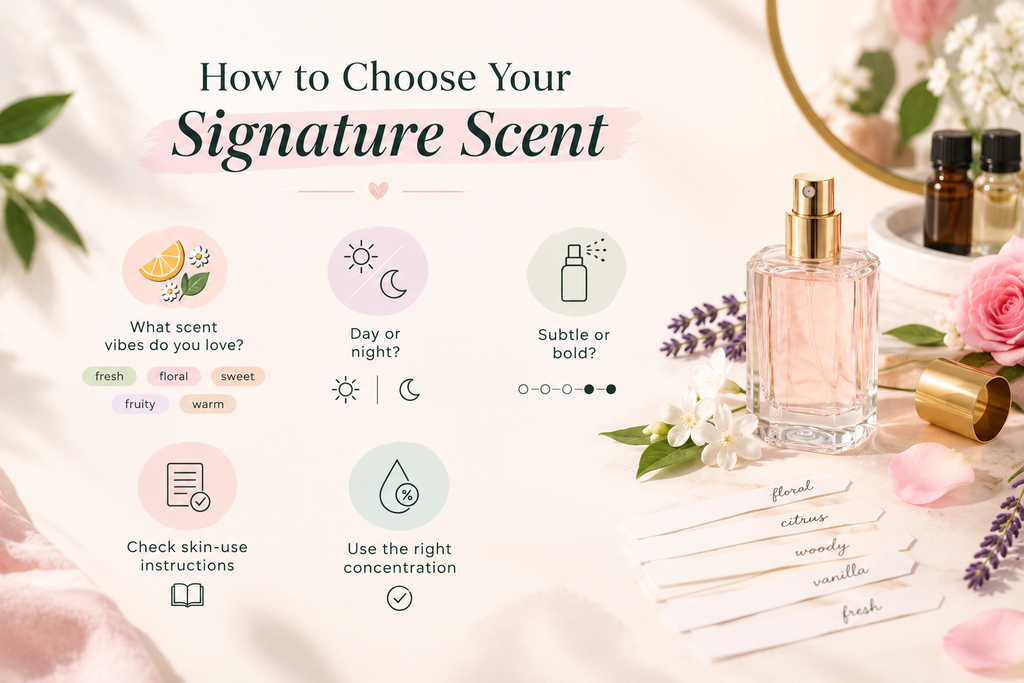
- Do you prefer fresh, sweet, floral, fruity, or warm scents?
- Will you mainly use the fragrance during the day or in the evening?
- Do you prefer a subtle scent or a more noticeable fragrance?
- Does the fragrance concentrate have clear skin-use instructions?
- Can you use it at a permitted concentration in your chosen formula?
Taking time to compare fragrance profiles can help you find an option that suits your personal style.
6. How to Make Your Body Mist Last Longer
A common concern with body mists is that the fragrance may fade sooner than expected.
Although longevity depends on the formula, application habits can influence your fragrance experience.
Apply to Clean, Dry Skin
Applying a fragrance to clean skin can help you enjoy its intended scent without interference from other products.
Allow your skin to dry before applying your body mist.
Moisturize Your Skin
A fragrance-free moisturizer can help reduce skin dryness and provide a comfortable base for fragrance application.
However, moisturizing does not guarantee that every fragrance will last longer. Results vary depending on the ingredients and your skin.
Avoid Overapplying
Applying more fragrance does not always create a better result.
Start with a small amount and assess how the scent develops before deciding whether you need more.
Avoid spraying near your eyes, mouth, or other sensitive areas.
Store Your Fragrance Properly
Heat, sunlight, and unsuitable storage conditions can affect fragrance quality.
Keep your body mist in a tightly closed, compatible bottle in a cool place away from direct sunlight and ignition sources.
Because alcohol-based fragrances are flammable, keep them away from candles, cigarettes, and other sources of heat or flame.
Give the Fragrance Time to Develop
A fragrance can smell different immediately after application compared with how it smells later.
Allow time for the fragrance to develop before deciding whether you like the finished scent.
Do not increase the fragrance concentration beyond the supplier’s permitted limit to make the scent stronger or longer-lasting.
For more helpful advice, read our guide to getting rid of strawberry legs.
7. Common Mistakes to Avoid When Making DIY Body Mist
Homemade fragrance projects can be enjoyable, but some mistakes can compromise the finished product.
Here are common problems to avoid.
Using Too Much Fragrance Oil
Adding extra fragrance concentrate can increase the risk of irritation or sensitization.
Always follow the applicable safety limits for the specific fragrance and intended application.
Mixing Fragrance With Plain Water
Water and many fragrance oils do not mix evenly on their own.
A mixture may separate into layers, leaving uneven concentrations of fragrance ingredients.
Water-based sprays also require appropriate formulation, preservation, and stability assessment. Simply combining water with fragrance oil does not create a reliable, safe body mist.
Using Ingredients Intended for Other Products
Fragrance ingredients designed for candles, diffusers, or room sprays may not be suitable for use on skin.
Check the intended application before purchasing any ingredient.
Ignoring Skin Sensitivity
Fragrance ingredients can irritate the skin or cause allergic reactions in some people.
Do not apply a new formula to irritated, broken, or freshly shaved skin. Avoid using it if you know you react to any of its ingredients.
A small-area use test may help identify an immediate reaction, but it cannot guarantee that an allergic reaction will not occur later.
Stop using the product if you experience burning, itching, redness, or other signs of irritation.
Using an Unsuitable Spray Bottle
Some packaging materials can react with alcohol-based products or fail to seal properly.
Choose a bottle and spray mechanism designed for the intended formulation.
8. How to Store Your Homemade Body Mist
Proper storage helps protect your fragrance from avoidable environmental exposure.
Follow these storage tips to help maintain product quality.
- Choose suitable packaging: Use a clean bottle compatible with alcohol-based fragrances.
- Close the cap securely: This reduces evaporation and unnecessary exposure to air.
- Avoid direct sunlight: Store the bottle away from sunny windows and other intense light sources.
- Keep it away from heat: Never leave a flammable fragrance near a stove, candle, or other ignition source.
- Label your product: Include the ingredients and date of preparation.
- Watch for changes: Discontinue use if the product develops an unusual odor, separation, or other unexpected changes.
Do not assume that homemade body mist has the same shelf life as a commercial perfume.
Shelf life depends on the specific ingredients, packaging, and formulation. Without appropriate stability assessment, you cannot reliably establish an expiration date just by looking at the product.
For a beginner, preparing a small quantity is a more practical approach than making a large batch that may sit unused for a long time.
9. Frequently Asked Questions
A simple alcohol-based body mist may use suitable perfumer’s alcohol and a cosmetic-grade fragrance concentrate approved for skin application.
You will also need a compatible spray bottle and accurate measuring equipment. The fragrance concentration must comply with the supplier’s applicable safety limits.
Yes, alcohol-free body mists are possible, but they require a different formulation.
Water-based products may need an appropriate solubilizer, preservative system, and stability testing. Simply mixing water and fragrance oil is not sufficient to produce a reliably safe product.
If you want an alcohol-free formula, choose a formulation developed for that purpose rather than substituting water into an alcohol-based recipe.
The longevity of the fragrance on your skin depends on its composition, concentration, application, and individual skin characteristics.
The storage life of the product is a separate issue and depends on its formulation, packaging, and stability. Do not assume a homemade body mist will remain safe indefinitely.
Some essential oils can be used in skin-applied fragrance products, but suitability depends on the specific oil, concentration, intended application, and safety restrictions.
Certain essential oils can irritate skin or cause sensitization, and some have additional restrictions related to sun exposure.
Use only ingredients with appropriate skin-use guidance and follow the relevant safety limits. Do not assume that natural ingredients are automatically safe.
Neither option is automatically better for everyone.
Making your own body mist allows you to experiment with fragrance preferences, while commercial products may offer professionally developed formulas, tested packaging, and clearer shelf-life information.
Your choice depends on your budget, fragrance preferences, ingredient knowledge, and willingness to follow safe formulation practices.
10. Conclusion: Create Your Own DIY Body Mist
Making a DIY body mist can be a fun way to explore fragrance, experiment with different scent profiles, and personalize your beauty routine.
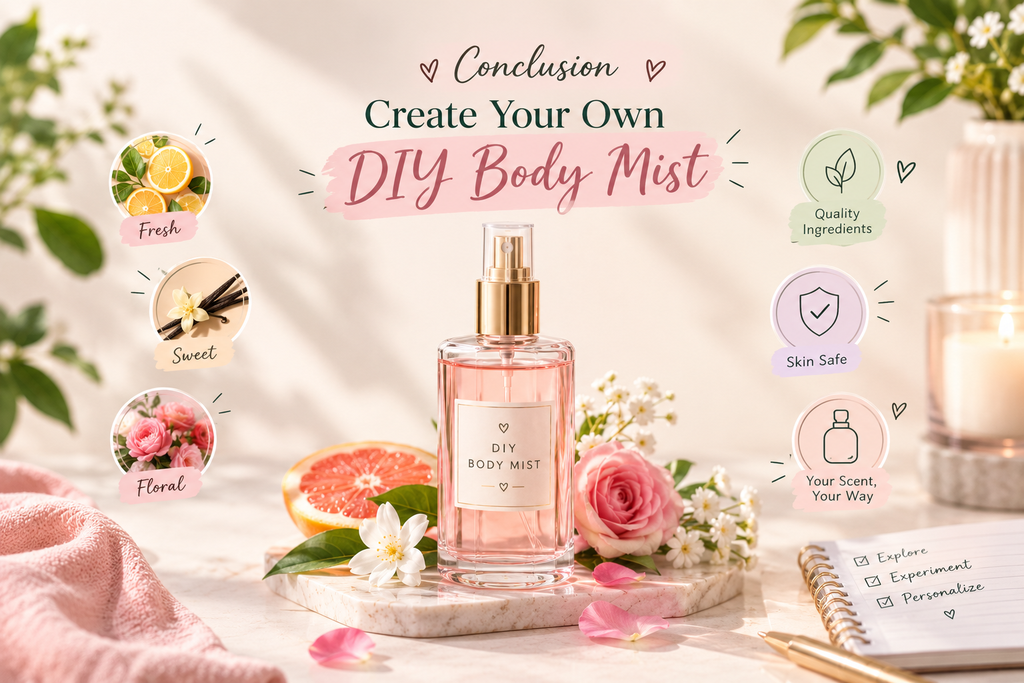
From fresh citrus-inspired fragrances to sweet vanilla and delicate floral scents, there are plenty of options to explore.
The key is to use ingredients suitable for skin application, follow the appropriate fragrance concentration limits, and choose a formula that is compatible with its packaging.
Remember that a homemade fragrance should never compromise skin safety for a stronger scent or a more appealing recipe.
Start by researching suitable fragrance ingredients, prepare only a small amount, and take time to understand how your chosen scent develops.
Ready to explore more beauty DIYs? Visit GlowHabit for more beauty, bodycare, and self-care inspiration, and discover simple ways to make your beauty routine feel more personal.